Common EVA Case Structures Explained: A Practical Guide for Brands
Learn about common EVA case structures including molded shells, foam inserts, mesh pockets, and clamshell designs. A practical guide for brands and OEM buyers.
CUSTOM EVA CASE KNOWLEDGE
Casero
12/30/20254 min read
Learn about common EVA case structures including molded shells, foam inserts, mesh pockets, and clamshell designs. A practical guide for brands and OEM buyers.
EVA cases are widely used across consumer electronics, medical devices, tools, and lifestyle accessories. When buyers first look at a case, they usually notice the shape or the surface finish. But in real use, structure is what makes the bigger difference. It affects protection, organization, ease of use, and even how professional the final product feels.
In this guide, we break down the most common EVA case structures and explain how brands choose the right design for different products. If you are still comparing broad product directions first, you can also browse custom EVA case categories or review OEM and ODM EVA case solutions.
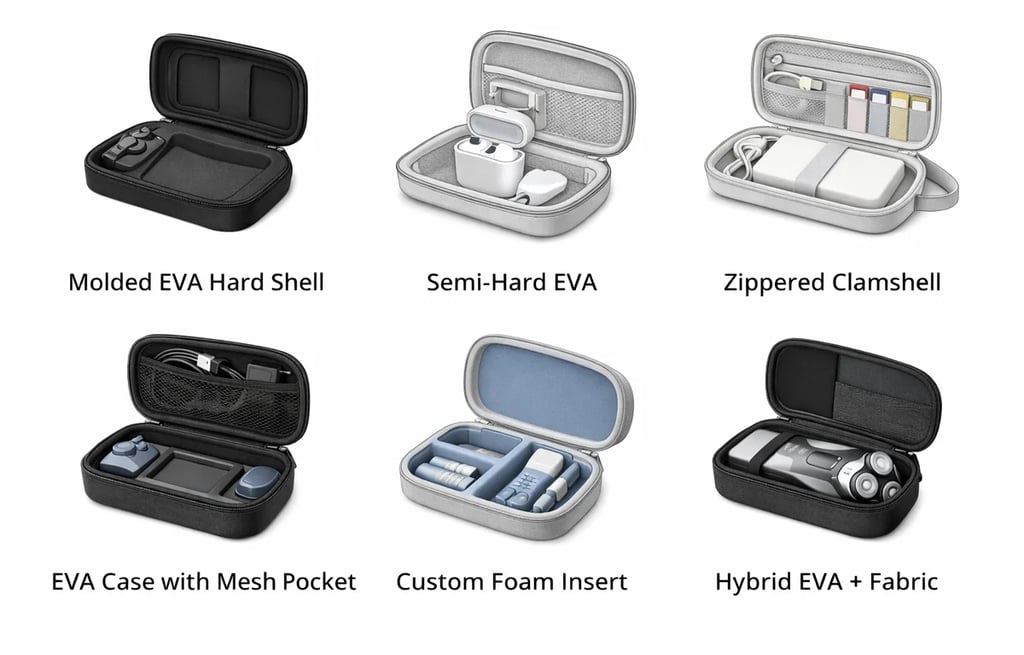
1. Molded EVA Hard Shell Structure
This is the most recognizable EVA case structure. The outer shell is thermoformed using molded EVA material, creating a rigid shape that offers excellent impact resistance.
Key features:
Strong shock absorption
Lightweight but rigid
Consistent shape for mass production
Best for:
Electronics, medical devices, power banks, gaming accessories, diagnostic tools
This structure is often chosen when the product needs a more stable outer shell and a cleaner overall presentation. It is commonly used in EVA Electronics Cases and EVA Medical Equipment Cases. For a more specific product example, see EVA Bone Conduction Headphone Case or EVA Stethoscope Case Protective Medical Instrument Storage Box.
2. Semi-Hard EVA Structure
Semi-hard EVA cases use thinner EVA sheets combined with fabric lamination. They provide basic protection while remaining flexible and compact.
Key features:
Reduced weight
Easier compression
Cost-effective
Best for:
Travel organizers, cables, grooming tools, compact accessories
This type of structure usually makes sense for lighter products that do not need a very rigid shell but still benefit from better organization and a cleaner carrying experience. It fits well with EVA Travel & Carrying Cases. If you want a broader look at where softer or more portable EVA case designs are used, see Where EVA Storage Cases Are Used.
3. Zippered Clamshell Structure
The clamshell structure is one of the most common EVA case designs, featuring a zipper that allows the case to open fully or semi-open.
Common zipper layouts:
Full-open 180°
Semi-open 90°
Three-side zipper
Advantages:
Easy access
Better internal organization
Suitable for inserts and mesh pockets
In practical projects, the zipper path and opening angle matter more than many buyers expect. A full-open structure is often better for kits, tool sets, and products that need clear top-and-bottom organization, while a semi-open design can feel more secure and compact for daily carry. If you are comparing opening styles as part of a custom project, How to Customize EVA Cases is a useful next step.
4. EVA Case with Mesh Pocket Structure
Mesh pockets are usually integrated into the upper lid to store cables, manuals, or small accessories.
Why brands choose mesh pockets:
Lightweight
Breathable
Flexible storage
Often paired with elastic bands or foam inserts in the lower compartment.
This structure is especially practical for electronics, accessory kits, and travel-oriented products where the main item and its small parts need to stay together without making the interior feel too heavy. It is often seen in EVA Electronics Cases and EVA Travel & Carrying Cases. A product-level example is the EVA Bone Conduction Headphone Case, where upper-lid storage can support cables and small accessories more naturally.
5. Custom Foam Insert Structure
Custom-cut EVA foam inserts are used to precisely secure products inside the case.
Insert options include:
Die-cut EVA foam
CNC-cut foam
Layered foam construction
Best for:
High-value products, medical equipment, precision tools
When the product shape is irregular, fragile, or includes multiple accessories, foam insert design becomes one of the most important parts of the case. A better insert does more than hold the product in place. It improves presentation, reduces movement, and makes the layout easier for the user to understand at a glance.
This structure is widely used in EVA Tool Cases and EVA Medical Equipment Cases. You can also see a related product example in EVA Screwdriver Tool Case Organized Protective Storage for Screwdriver Sets. For buyers comparing organized layouts for instruments or kits, How to Choose the Right EVA Tool Case for Your Instruments is also relevant.
6. Hybrid EVA + Fabric Structure
Some EVA cases combine a molded shell with fabric panels for improved aesthetics and grip.
Benefits:
Enhanced brand appearance
More color and texture options
Improved user experience
This structure is often preferred when brands want the protection of molded EVA but also care about surface feel, visual texture, or a less industrial look. It can make the case feel more retail-ready, especially for electronics, premium accessories, and branded carrying products. If surface finish is part of your decision, Oxford Fabric for EVA Cases gives a more detailed look at common outer material options.
Choosing the Right EVA Case Structure
Selecting the right EVA structure depends on:
Product size and weight
Protection requirements
Target market positioning
Retail or OEM packaging needs
In most projects, there is no single “best” structure for every product. A travel organizer, a diagnostic tool, and a screwdriver set may all use EVA, but the right shell hardness, opening style, insert type, and surface material can be very different. That is why it helps to look at both application and structure together. For a wider application view, see Where EVA Storage Cases Are Used. If you want to understand how these decisions connect to production, How EVA Cases Are Manufactured is also worth reading.
At Casero’s custom EVA case solutions page, brands can review how structure selection, material choices, and OEM development come together in real projects.
Conclusion
Understanding EVA case structures helps brands make better packaging and product decisions. A well-designed EVA case is not just a container. It affects protection, usability, presentation, and how the product is experienced in the market.
If you are planning a new case project, it is usually best to start with the product size, accessory list, and use scenario first, then decide on shell type, insert structure, and outer material. You can explore more options through custom EVA case categories or start from OEM and ODM EVA case solutions.
Related Articles