How EVA Cases Are Manufactured: A Step-by-Step Guide to Premium Protection
Discover how professional EVA cases are made — from material selection and mold design to pre-lamination, compression molding, assembly, and quality control.
CUSTOM EVA CASE KNOWLEDGE
Casero
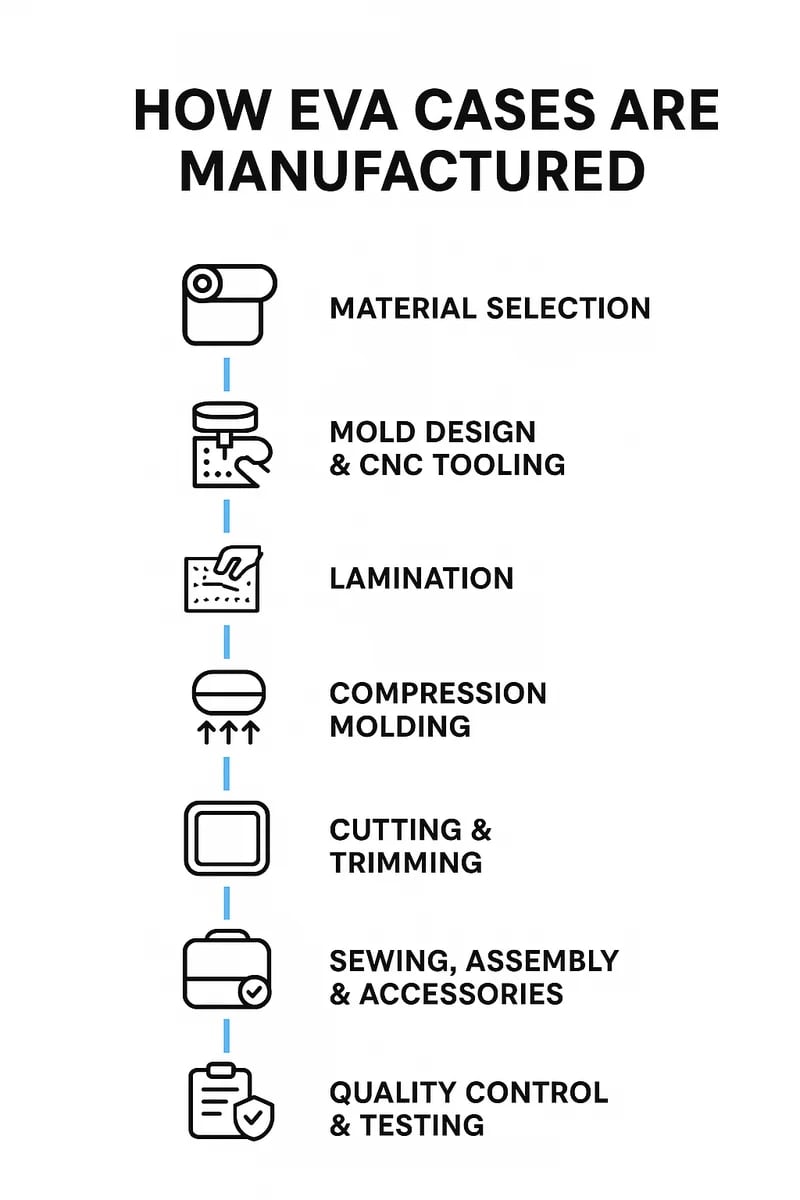
Protective cases may look simple from the outside, but the manufacturing process behind a high-quality EVA case involves multiple engineering and production steps.
From material selection to final assembly, each stage affects durability, protection performance, and overall product quality. Understanding how EVA cases are manufactured helps brands and product designers make better decisions when developing protective packaging solutions.
This guide walks through the typical manufacturing process used by professional EVA case factories.
Material Selection and EVA Sheet Preparation
The process begins with selecting the right EVA foam material.
EVA (Ethylene-Vinyl Acetate) is widely used for protective storage cases because it combines flexibility, durability, and shock absorption in a lightweight structure.
Manufacturers choose different EVA densities depending on the product being protected. Lower-density EVA offers softer cushioning for delicate electronics, while higher-density EVA provides stronger structural protection for tools or instruments.
At this stage, manufacturers also select outer surface materials that will later be laminated onto the EVA shell. Common materials include Oxford fabric, PU leather, or jersey fabric for EVA cases, depending on the desired appearance and durability.
Fabric Lamination
Once the materials are prepared, the EVA foam sheet is laminated with exterior fabric and interior lining.
During lamination, heat and adhesive bonding create a multi-layer sheet consisting of:
• exterior fabric
• EVA structural foam
• interior lining material
This layered structure improves abrasion resistance and gives the case its finished appearance before molding.
Surface materials are an important design choice because they influence the case’s durability, texture, and brand presentation.
Die Cutting and Material Shaping
After lamination, the material sheets are cut into precise shapes.
Industrial cutting machines or die-cutting tools create the components that will later form the top and bottom shells of the case. Accurate cutting ensures the molded parts align perfectly during the forming process.
At this stage, designers also consider the internal layout of the case, which is why understanding different EVA case structures is important when developing protective storage solutions.
Heat Press Molding (Thermoforming)
The most important step in EVA case manufacturing is thermoforming.
The laminated EVA sheets are heated until the material becomes flexible, then placed into aluminum molds. Under heat and pressure, the material is pressed into the exact shape of the case shell.
This process creates the rigid outer structure that gives EVA cases their recognizable semi-hard protective form.
Thermoforming allows manufacturers to create cases that match the contours of specific products, which is why it is widely used for electronics, tools, and medical equipment storage.
Trimming and Secondary Processing
Once molded, the case shells go through trimming and finishing processes.
Excess material is removed, edges are refined, and openings for zippers or logos are prepared. Additional surface treatments such as embossing, printing, or logo pressing may also be applied during this stage.
These finishing processes improve both the functionality and the visual quality of the final case.
Sewing and Assembly
After the molded shells are prepared, the case moves into assembly.
During this stage, workers install the components that transform the molded shell into a functional storage case.
Typical assembly elements include:
• zipper installation
• mesh pockets or elastic straps
• foam inserts for product protection
• carrying handles or shoulder straps
The interior layout is especially important for product protection, which is why many brands develop custom EVA cases designed specifically for their devices or equipment.
Quality Inspection and Packaging
Before shipment, every EVA case should undergo quality inspection.
Factories typically check several factors:
• dimensional accuracy
• zipper operation
• surface appearance
• bonding strength
• overall structural integrity
Quality control ensures that each case provides consistent protection during storage, transportation, and everyday use.
Only after passing inspection are the cases packaged and prepared for export or delivery.
Why Understanding the Manufacturing Process Matters
For brands and product developers, understanding how EVA cases are manufactured offers several advantages.
It helps buyers evaluate suppliers, choose appropriate materials, and design cases that truly protect their products.
Learning about how to customize EVA cases can also help businesses develop packaging solutions that combine protection, branding, and functionality.
Conclusion
Manufacturing a high-quality EVA case involves far more than simply shaping foam.
From material selection and lamination to thermoforming, assembly, and quality inspection, each step contributes to the final product’s durability and protective performance.
Because of this structured manufacturing process, EVA storage cases have become a preferred solution for protecting electronics, medical devices, tools, and other sensitive equipment.
Looking for Custom EVA Case Solutions?
If you are developing a product that requires reliable protection, EVA cases offer a practical combination of durability, lightweight structure, and flexible design.
Many brands choose EVA cases not only for protection, but also for professional product presentation and efficient shipping. By understanding how EVA cases are manufactured and the different design possibilities, companies can create storage solutions that perfectly match their products.
If you are planning a new project, you may also find it helpful to explore how to customize EVA cases to see how materials, structures, and interior layouts can be tailored to your specific needs.
Feel free to contact our team to discuss your product requirements and discover the best EVA case solution for your application.